Tuesday, August 10, 2004

Brewers TV

You can tell the Milwaukee Brewers are not one of the signature franchises for major league baseball. Their announcers are terrible. Saying their pitcher would be better if he walked more batters. Showing a flashback near the end of an at-bat with runners on base. Claiming John Smoltz had proven himself a great closer year after year. And we're still in the 1st inning.

Time Travel

If this headline is accurate, then the Greeks have access to time travel technology.

Captain Kirk Returns

It looks like William Shatner will definitely reprise his role as Kirk on Star Trek: Enterprise this season. As usual, I'm withholding judgement, as the powers that be convinced me last season that sometimes they actually know what they are doing. Still, this is not the sort of crutch a truly vigorous TV show would lean on in early-season advertisements.

Taliban Split

RFE-RL reports that some fighters have broken away from the leadership of Mullah Omar and formed a new jihadist group based in the area of Qandahar. This is probably true, as a Taliban source admitted the group existed, but denied it was connected to the Taliban, and claimed in fact that they welcomed its formation. The new group is led by Mullah Sayyid Muhammad Akbar Agha, and says they believe that the Taliban have suffered from poor leadership.

Monday, August 09, 2004

Voter Education in Saudi Arabia

Gulf News reports that Saudi Arabia's Ministry of Rural and Municipal Affairs is preparing a voter education campaign leading up to the local elections scheduled to begin in November. This is a positive development showing someone at least is taking these seriously. Still, as a step toward democracy this is so insignificant it boggles the mind.

Speaking of Afghanistan

Over the weekend, two marines and their interpreter were killed in Ghazni province, while fighting broke out between two regional leaders in the west. The Kabul government has sent in some troops to quell the situation, but they are failing. Just another day in Afghanistan, which you can read about here.

Bush the Regular Guy

Near the end of an interesting post about his feelings for President Bush, Tim Young addresses an issue that has long frustrated me when arguing with Bush supporters:

"I've also heard a lot of people, mostly conservatives, claim that they'd affirmatively rather have a "ordinary man" in power. I happen to be of the view that just as I'd bristle at the thought that my surgeon didn't know any more about surgery than I or any ordinary person would, or that my mechanic wouldn't know any more about fixing cars than I or any ordinary person would, I wouldn't want someone in charge of government policy who neither knows nor cares to know about the workings of government than I do. Of course, a Bush supporter pushing this reason would have believe that Bush were 'just one of the guys,' which is a silly notion when one thinks about it at all. Regular guys aren't put on the boards of large corporations or given multiple companies to run into the ground."

Why this point is even controversial is beyond me. But then, I don't see Bush as a "straight shooter," either.

Al-Qaeda's Conflict Diamonds

New reports say al-Qaeda operatives made significant conflict diamond purchases before the September 11 attacks in order to have funding after a feared American assault on their financing. In doing so, they dealt directly with then-President Charles Taylor, who met with Ahmed Khalfan Ghailani and others at his home in Monrovia. I've been watching this story for a long time, and was highly confused (1, 2) when President Bush didn't mention the War on Terror when he finally confronted Liberia last summer. During the summer of 2003, I did see part of a Senate hearing on Liberia, and only Russ Feingold seemed interested in the al-Qaeda connection. In a sense, this is a dead issue, as the Taylor regime has been removed, but it remains a curious episode in Bush's foreign policy.

Sunday, August 08, 2004

Whither Afghanistan?

This article is the best analysis of Afghanistan's current political situation I have read in at least the last six months. It places the current situation in the context of Afghan society as a whole, rather than just the relatively westernized Kabul, and raises key questions like whether the high voter registration is a sign of true democracy taking root or regional leaders trying to maximize their own influence on the election. After all, does anyone really believe that warlords who suppress dissent in their own territories are willing to allow people to put whomever they want in charge of the country?

The issue of centralization vs. regionalism is also crucial. I had a bad feeling when it was decided to give Afghanistan a strong central government, something that has never worked there. The country Afghanistan most resembles is probably early Saudi Arabia, and for decades that kingdom was held together largely by forcibly cultivated relationships between the Saudis and regional tribal leaders. In Afghanistan, Karzai can barely muster the threat of military force, as the warlords have militias of their own. As near as I can tell, the country is held together only by corruption, as everyone wants a piece of the tax revenues and smuggling trade. Simply holding an election won't even begin to change that political dynamic - it will simply add another arena for conflict.

Iraqi Shi'ite Leadership

In another interesting post about Grand Ayatollah Ali Sistani's health, Juan Cole mentions that his likely successor would be Grand Ayatollah Ishaq Fayyad. Fayyad, like Sistani, opposed the doctrine of velayat-i faqih, or "rule of the jurist," as developed by Ayatollah Khomeini and followed by Iran, so that is good news. According to Cole, Fayyad was also the secretary to Grand Ayatollah Abu al-Qasim al-Musawi al-Khoe'i, who was the chief Shi'ite leader from 1980-1992 and the father of the alim with the same surname whom Muqtada Sadr probably had assassinated in April 2003. A biography of al-Khoe'i is here. I can't find anything on Fayyad.

Saturday, August 07, 2004

Sudan Stuff

TAPPED's Sam Rosenberg is looking at the quality of American media coverage of Sudan, in the middle of which he links to Ripple of Hope, a blog focused on the conflict. I think this crisis needs more attention than it's getting, even if there are no perfect options for stopping it. Americans know almost nothing about Africa, and that whole continent suffers a lot from the stereotype that its conflicts are all impossible to understand or rooted in some sort of ethnic animosity. If the media were more willing to talk about actual issues, it could create an environment in which people react more strongly to atrocities which take place there.

IWPR Goes to Africa

The excellent Institute for War and Peace Reporting is all set to open a bureau covering Angola, Mozambique, Swaziland, and Zimbabwe. I rarely post on Africa, but it's an interesting place.

Sistani's Health and Sadr's Army

In the middle of a strong post discussing the fighting in Najaf and elsewhere, Juan Cole mentions that Sistani's alleged heart trouble was merely a ruse to get him out of Najaf:

"Al-Hayat reports that Sistani's reason for leaving at this juncture was to remove himself from the scene of the fighting and to lift the mantle of his authority from the Sadrist movement. It was alleged that his distance from Muqtada, always substantial, had widened further in recent weeks. Al-Hayat suspects that if Sistani has ceased trying to protect Muqtada, it could mean that a decision has been made to put an end to him.

"So, I think al-Zurufi and the Americans sat down and planned the crackdown on the Mahdi Army. (It may be that the caretaker government of Iyad Allawi and especially hardline Interior Minister Falah al-Naqib spurred al-Zurufi on.) I also think Muqtada sat down and planned out how to keep the Mahdi Army ensconced in Najaf (which is not their natural territory) despite the truce. Neither side had realistic expectations of the truce, or was sincerely committed to any sort of compromise that would be acceptable to the other side."

Friday, August 06, 2004

Climbing Mt. Fuji

My friend Rob Groves has climbed Mt. Fuji. Unlike me, he posts pictures. I may get around to that, but for right now things are busy as I work feverishly on my dissertation and learn the fine art of federal grant management.

UPDATE: Here's more.

Saudi Elections Delayed

Saudi Arabia, you may remember, is planning to have elections for half the seats in municipal councils. Originally these were scheduled for next month, but now they have been delayed until November so as not to conflict with Ramadan, which begins in October. Someone else will have to figure out that logic for me. The first question might be whether they would have realized when Ramadan was when they laid the original plans.

Thursday, August 05, 2004

Sistani's Health

Grand Ayatollah Ali Sistani is being treated for heart trouble. I doubt this is anything to worry about right away, but given his importance to Iraqi stability, it does make me a little nervous.

Saharawi Divorce

BBC has a report on the effects of Morocco's new family law in Western Sahara. I found it a fascinating read.

Wednesday, August 04, 2004

No Surrender, No Retreat

This is great news. Kudos to Bulgaria for proposing it, the Bush administration for orchestrating it, and everyone who signed on.

Muqtada Sadr Update

According to Juan Cole, American military forces denied they were trying to arrest Muqtada Sadr on Monday, and said they just didn't know where they were. Like Cole, I find that plausible, and a little depressing.

Satloff on Morocco

Via Martin Kramer, I find that WINEP's Robert Satloff has some thoughts from his recent time in Morocco. Not unexpectedly given his political orientation, I have some disagreements with him, such as his thinly supported down-playing of anti-American sentiment in the country. I didn't have much personal experience with this, and many people had pictures of Bill Clinton hanging in shops and such as well as the king, but there was definitely opposition to American foreign policies regarding the Muslim world, which is what the polls are used as evidence for. At the same time, Satloff noticed the same thing I did about Moroccans tending to distance themselves from Middle East and oppose militant Islam, an important point to consider.

What I found bizarre, however, was Satloff's call at the end for the promotion of English education so as to combat Islamist elements in the "war of ideas." It is true very few people spoke English. Knowledge of French, however, was everywhere - it used to be one of the country's official languages. And despite this lack of English, Morocco is easily one of if not the most liberal countries in the Arab world. On the other hand, the Middle East, where knowledge of English is widespread, is where people show an ever higher level of anti-Americanism. (An amusing side note: Morocco's English-language university - al-Akhawayn - is funded by Saudi Arabia.)

Now maybe Satloff does have something to stand on here. It was my impression that French has made deeper inroads into Morocco than English has in Jordan, and while a friend from Oman tells me that English is almost the preferred language in the Gulf, the huge guest worker populations are a complicating factor in assessing cultural influences and I won't feel truly comfortable assessing it all until I've been there. So maybe Satloff feels that the deep French influence has contributed to making Morocco what it is today, and is simply calling for English promotion since the United States is English-speaking and not French speaking. If so, however, it seems odd to leave out a key piece of evidence supporting what he has to say.

Tuesday, August 03, 2004

Afghan Presidential Politics

This article on Massouda Jalal puts on a really positive tone. Just three years after the fall of the Taliban, a women is running for President of Afghanistan, and people are looking to her for change. Between the lines, however, there are problems. For one, the piece is based almost entirely in Kabul. No one disputes that the population of that city, patrolled by foreign peacekeepers, are a liberal bunch glad to be rid of the Taliban. However, the rest of the country is largely divided into fiefs governed by fundamentalist warlords who follow the central government only as long as they are basically left alone.

Where do these warlords fit into the Presidential race? The article drops a key sentence on this: "Many warlords are reported to be controlling votes from their regions to gain favor with the two top candidates: Karzai and Mohammad Yunos Qanuni." In other words, everything you read about, such as the high voter registration rate and and the election itself, is part of the same old Afghan political set-up as power players with militias and opium revenue try to get a bigger slice of the pie. Is it better than the Taliban? Sure. But we're a long way from democracy.

I hate to be pessimistic about all this, but there it is. And this will affect another Presidential election, as well. This October, President Bush will be able to talk about an election in Afghanistan returning to power the pro-American Hamid Karzai while pointing out sympathetic candidates like Massouda Jalal. The reality of what happens on the ground will go unnoticed as Republicans claim Iraq is on the same trajectory. And this ploy may well help Bush win four more years in the White House.

History Blogging

Greg Tracey announces that someone has created a history topic exchange in an attempt to promote the history blogosphere. It's starting small, but looks promising. Greg's blog, incidentally, is highly interesting in its own right, and has an emphasis on 20th century history.

Also, I don't know whether I've linked to this before, but there's also a "Medievalist Weblogs" list, including areas of interest and the frequency with which medieval content is posted.

Monday, August 02, 2004

Going After Sadr

This snuck up on me, but apparently we are again going after Muqtada Sadr. Given how things turned out last time, I'm not sure if this is wise.

Dahlan's Power Play

It seems increasingly clear that Muhammad Dahlan, whom I have been watching for a long time, is behind much of the anti-Arafat uprising in the Gaza Strip. Ha'aretz quotes him using some strong language against Arafat and issuing a deadline of August 10 before protests escalate. The Jerusalem Post reports that Dahlan is offering cash incentives to potential supporters in the West Bank. The article also states that pro-Arafat gunmen broke up a reformist meeting in Nablus. I continue to suspect that outside powers do have a hand in the uprising, as Israel and the U.S. would love to have a strong non-Hamas hand in Gaza before the Israeli withdrawal, and if successful, Dahlan could represent that hand.

Turkmenistan's Religious Rules

As the Moscow Times reports, Turkmenistan is implementing plans to make it easier for small religious minorities to practice their faith. The article indicates in a couple of places that this happened because of American pressure given Saparmurat Niyazov's desire for closer ties with the West. While this is only a small step, it is a positive development in a country that badly needs one.

Merit Pay, Student Evaluations

In response to this post, high school teacher Craig Barker e-mails the following:

"I want all schools to be rid of the dead wood, I also want risk takers to be protected from vindictive administrators or personal vendettas...Here's the problem I have with merit pay that has never been fully explained to me. I teach five classes a day, in the fall for the last three years, it's been three sections of freshman world history and two sections of AP U.S. History. I have a measurable test with the AP kids to know if they achieved as I had hoped, I have the AP test. But what about those world history kids? At the semester break, they will be shuffled to other world history teachers, and I will get two new classes worth as I also pick up my International Relations class. How exactly do we measure my achievement as a teacher. Two of my three subjects are in areas that draw the brightest and best of the talent pool. Do I get a monetary reward for teaching kids who likely didn't really need my help as much as a kid achieving at the middle of the percentile scale? And when the kids do take the Michigan Education Assessment Program (MEAP) test in their junior year, how do we know that it was my effort that put them over the top? How do we know I didn't damage them and another teacher is the one who helped them? There's no way of knowing and that is why I am distrustful of merit pay, no one has ever been able to explain to me how it would work in such a way that I would know it was my efforts."

On a somewhat related topic, Jonathan Dresner and Sharon Howard are discussing grade inflation and student evaluations. This quote from Dresner seemed especially insightful:

"One thought which didn't make it into the article is that student evaluations and student learning assessments both assume that learning is a short-term process, that a student can judge at the end of a semester what impact a teacher has had, and that what a student learns over a semester is best evaluated at the end of the semester. They also assume a sort of separability which is not entirely justified, either: students evaluate teachers in comparison, not in isolation, and students do not take one course at a time (and, by the way, there's no control group, and no attempt to openly discuss evaluation metrics, just a self-referential population making up their own scales). The most effective and realistic forms of assessment are going to be post-graduation tracking, long-term studies, carefully selected and analyzed qualitative and quantitative measures."

Interesting perspectives all around.

Electricity

Remember when we were restoring all that electricity in Iraq? And when we stood up to Muqtada Sadr?

"For the second straight day on Sunday, angry crowds attacked the Electricity Office in downtown Najaf, protesting interruptions in the electricity supply that stretched to as many as 18 hours straight in recent days. The lack of electricity hurts local industry and agriculture, and leaves the population without air conditioning or fans at a time when highs are 50 C./ 122 F. Employees fled from the Electricity Office in fear of their lives, and were protected from attack by the Mahdi Army militiamen of Muqtada al-Sadr, who still patrol the Old City."

Via Juan Cole, who also talks about a political crisis in Amara.

Sunday, August 01, 2004

300 Wins

I'm watching the Gerg Maddux go for his 300th win right now, and the announcers keep talking about the possibility that no one will ever reach that mark again, with the possible exception of Tom Glavine. This strikes me as really pessimistic. 300 wins requires a player to average in the high teens in wins for a fairly long career. This is certainly rarer than it was in the days when pitchers got 30 decisions a year, but it still happens. I think Mark Mulder could conceivably pull it off, as might Mark Prior or Javier Vazquez. If you look at Maddux's career, he did have a few years with very high numbers of total decisions, but I suspect that if if those are reduced a bit, he'd still make it to 300 - after all, he has another couple of years left in his career. So while I think it will be rarer, and longevity will become a larger factor, we will see 300 wins again.

Saturday, July 31, 2004

Bombings in Tashkent

A group ed with al-Qaeda has taken responsibility for the attacks on the American and Israeli embassies in Tashkent. I don't have any comment on the ongoing investigation into what happened, nor do I think there is a connection between this and our decision to suspend $18 million in aid to Uzbekistan. However, I do think that if this had happened right after the Republican convention, some individuals would argue that the terrorists were trying to distract attention from Bush so as to help throw the election to Kerry.

Friday, July 30, 2004

The "Stable Iraq" Thing

What Matthew Yglesias said. One thing people upset about this should keep in mind is that we now have an election between John Kerry and George Bush. Talking about the right goal is nice, but worse than useless unless you can actually achieve anything. And, given the fact that the Bush administration has completely bungled post-war Iraq so far, do those disappointed in Kerry's "stable" rhetoric want risk what things could look like if Bush does his version of staying the course for the next four years? Kerry, on the other hand, could manage it back into stability, and then if they want they can elect somone else to take it from there. When a situation is this bad, you need to take what you can get. Stability is a prerequisite of democracy, not its opposite. And how long was it before Germany and Japan became democracies after World War II?

Palestinians in Hebron

World Press Review has a profile of Palestinian life in Hebron's Old City, where there is a small yet well-fortified Jewish settler population. The whole article is worth reading.

John Kerry and Teachers

One issue I care a lot about is education. As an aspiring college professor, I consider myself a currently cocoon-stage professional in the field, and believe that the situation in high schools matters to higher education both in terms of the quality of students they produce and because policies adopted there are likely to impact the range of policies open within higher education. That is why John Kerry's call for an end to teacher tenure concerned me - while I admit some sort of reform is needed, I see tenure as crucial to the preservation of academic freedom, and believe that an end to high school teacher tenure will weaken the case for maintaining it at the college level.

This Washington Monthly article, however, puts Kerry's K-12 education plan in an interesting light. The key to his ideas is partnership between the teachers' unions and administrations, with the theory that this will produce results acceptable to both, though that will likely depend on the personalities and political situation of individual school districts. What intrigued me, however, was the types of systems the article foresaw spreading:

"Denver's plan, sponsored jointly by the school board and the local teachers union, called for teachers to develop achievement objectives for their students, and raised the pay of those instructors whose students met them. After a pilot program proved successful in hiking test scores, teachers easily approved a new policy that will offer monetary rewards both for achievement and for those who teach in schools or subjects where skills are scarce. The plan, drawing upon the revenues from a new local tax, has raised the maximum teacher pay from $60,000 to $100,000."

This idea is in the merit pay column, but has implications beyond it. One problem with many education reform programs, like programs against unionized work forces in general, is that they portray administrators and managers into as all-wise, all-knowing benevolent beings who would, saved from having to actually work with those under them, easily build a better society. This program says that teachers themselves are the ones to reform education and creates a system of evaluation that surpasses both student evaluations and standardized tests. And, if a teacher is terrible and chronically fails to meet the goals they themselves set then it should be easier to get rid of them just like a teacher can be safe by always meeting their goals regardless of whether their students like them.

Such a proposal, if it works, should result in better students showing up in college classrooms. Not only that, it can affect the way society perceives educational institutions as working, so that when college administrators toy with eliminating tenure to achieve their own goals, there will be another model at hand in which this basic guarantee of academic freedom remains intact, and they will be less able to use the tenure system to define "the problem." And think, too, how might such ideas affect the tenure review process or the situation for adjuncts? In the latter case, I guess administrations could always decide to "go in a different direction" or some such thing, but what if the key component of getting tenure at the college level became your ability to achieve definable goals you agreed to on being hired? Having never been around a tenure review process where the result was not clear-cut, I don't know how this might play out, but it is, at the very least, interesting.

Iraq Developments

Yesterday, President Bush officially ended 14 years of sanctions on Iraq. Another growing story, however, is the proposal for a Muslim force to assist in keeping order in the country. This is not as easy as it sounds, as many Muslim nations have small armies, especially once you take out Syria, Iran, and Turkey on the grounds they border Iraq. The main contributors would probably be Indonesia, Pakistan, and Egypt, and Pakistan at least is already occupied with the war against al-Qaeda along their border with Afghanistan. So I have reservations about whether this can generate troop levels that will make a significant difference to Americans. Juan Cole also mentions this plan, indicating that it will probably require the Bush administration to compromise and allow for UN organization of the effort. The good news there is that they might actually try given the importance of seeming to make progress in Iraq before the election.

UPDATE: Muqtada Sadr opposes the possibility of a Muslim force aiding the occupation.

John Kerry

This guy might be a decent Presidential candidate after all.

Thursday, July 29, 2004

MSF Leaves Afghanistan

Doctors Without Borders, my favorite charity, is shutting down its programs in Afghanistan in response to killings of its personnel. This organization has been in Afghanistan for 24 years, which means they handled the Soviet invasion, and the civil war which brought the Taliban to power. Not only that, but the attacks on their volunteers took place in the northwest, not in the south, which has the reputation for the most security problems. This is very troubling sign and a depressing if understandable development.

Syrian Buffalo Herds

While continuing to read al-Baladhuri's Futuh al-Buldan, I ran across a tradition that in the early 8th century, Syria developed a lion problem, so the Umayyad caliph al-Walid I sent 4000 buffalo to the area to drive them away.

Buffalo? Clearly, I thought, the meaning of this Arabic word has changed with time. However, from Encyclopedia Britannica, I learned that there were in fact buffalo in Southeast Asia and the jungles of sub-Saharan Africa. The tradition in the text went on to state that the Muslims gained thousands of buffalo from the conquest of Sind, and that those who were not sent to Syria were left in some place called Kaskar. Furthermore, during the reign of Yazid II, another 4000 buffalo were confiscated from the Bani al-Muhallab and sent to join the others in Syria, along with a bunch of South Asians. They were there at least until the Abbasid period.

So I guess thousands of buffalo used to roam Syria. Who knew?

Hazaras Prosper

If this Pak Tribune article is any indication, things are good right now for Afghanistan's Hazara population. The Hazaras, who claim to be descended from the Mongols, are Isma'ili Shi'ites who have long been persecuted by the country's Sunni majority, and during the 1980's supported the Soviets because they believed the mujahideen would be worse. Now, they are building their community and hoping to participate in a democratic process in the near future.

Wednesday, July 28, 2004

Let Me Explain...

I've often wondered how Muslims feel when they see me posting on something they take for granted about Islam like it's some strange foreign concept that requires explication. After reading this as someone who was raised Baptist, perhaps I have some idea. It can be amusing.

Ramadi

More potential problems in Iraq: IWPR reports that we may start to see more signs of insurrection in Ramadi, the residents of which are drawing inspiration from what happened in Falluja. One problem our occupation in Iraq had is that we quite literally lost some high-profile confrontations, both in Falluja and in our attempts to arrest Muqtada Sadr. Unlike some, however, I don't see that we had much alternative. Juan Cole has often commented on how tribal ties affect the size of the insurrection in these cities - attacking them often just means we make enemies of everyone's cousin. If I might make a slightly unnatural connection, Amanda Butler has a story which shows these sorts of kinship ties in action, albeit in a completely different situation. (Scroll to the last episode.)

President Bush and his administration have turned to force where skill was called for, and refused to address issues of legitimacy that underlie a lot of this whole mess. Of course, the most anti-Western types - such as Zarqawi and Co. - will fight us no matter what, and there we have nothing to do but respond in kind. However, there's also a lot of resistance that wouldn't be there if, say, we had gone in under international auspices and allowed for more real democracy, at least at the local level.

Battle for Kirkuk

At this point, that title remains metaphorical, but this article paints a troubling portrait of the controversy of Kirkuk, as Kurds seek to undo Ba'athist ethnic cleansing in the oil-rich city so as to improve their chances of having it as their capital. Regular readers will remember that there are lots of unhappy people floating around in refugee camps, and little political structure to contain the conflict. One thing I didn't know before was that the Kurdish leadership is using the rationing system to force Kurds to move to the city. Like so many issues in Iraq today, this has the potential to be explosive.

Barack Obama

My native state has a new star in Barack Obama, whom I saw for the first time last night. Links to the text and video of his speech last night are posted to Dean Nation, where I seem to be minding the store during the convention. (My posts there, however, aren't terribly momentous.)

UPDATE: Some have anointed Barack Obama first-Black-President-in-waiting. He might be Presidential material, but as this Daniel Drezner post reminds me, there's also a guy named Harold Ford, Jr. floating around. Ford might be too moderate for many Democrats, but don't rule him out as someone's 2012 VP pick, with his own shot at a 2016 or 2020 nomination.

Classics

Kristin Smith is wondering what makes a work a classic. I don't think there's any single answer to this question. The best you can do is probably something general, like a work which large numbers of people have found worth reading over a period of time. The reasons why they might read it, however, can vary. That's why I disagree with her dismissal of, say, Stephen King's chances of being remembered. A work can become a classic simply because it's well-written, regardless of it's intellectual value. After all, has The Three Musketeers really changed anyone's life? What about Around the World in Eighty Days? As long as readers can relate to the world in which a great story is set, it has a chance to be remembered.

Tuesday, July 27, 2004

Tax Refunds

In another tradition from Futuh al-Buldan, when the Byzantine Emperor Heraclius invaded Syria before the Battle of Yarmouk, the Muslims returned the taxes they had taken from the people of Homs on the grounds they couldn't defend them.

Maybe that explains Bush's tax policies...

The Name of Mecca

While doing dissertation research, I ran across a tradition in al-Baladhuri's Futuh al-Buldan that Mecca was originally called Salah. I googled a bit on-line to see if this was in the mainstream Islamic tradition anywhere, but it doesn't look like it. I'm a bit skeptical of a claim that Pre-Islamic Arabs called a city "Condition of Righteousness," anyway. In my googling, however, I did learn that Saudi Arabia has changed the official Latin spelling to Makkah so as to avoid sacriligious usages of the word "mecca" in English.

Sayyid Qutb on the United States

Over at Ideofact, Bill Allison's been doing a lot of excellent blogging as he reads through the works of Sayyid Qutb. Those of you interested in the ideology of this crucual Islamist thinker will want to check it out. Today's entry is a bit lighter than most: Qutb's impressions of the United States based on his travels here in the 1940's.

Monday, July 26, 2004

Afghanistan Election Update

RFE-RL reports that Education Minister Yunus Qanuni, another former Northern Alliance commander, has decided to run for President of Afghanistan. I'm not familiar with him, but he may have the backing of Defense Minister Muhammad Fahim, which could be significant. An additional point, however: This article protrays Karzai as having three major rivals - Qanuni, Dostum, and a poet named Latif Pedram. The latter two are basing their candidacies on allegations that Karzai is slighting non-Pashtuns who live in northern Afghanistan. Because of the ethnic make-up of the Northern Alliance, I'd guess Qanuni would draw on some of the same issues, though he's talking more about violations of the constitution. This means that Karzai remains more or less unchallenges among the country's most important ethnic group. If this does become an election you can analyze in conventional political terms rather than who has a bigger militia and can dispense more patronage, then Karzai still seems safe.

Al-Jazeera and the Democrats

Via the extremely useful DNC 2004 Weblogs News Aggregator, I find this post about the convention officials removed the al-Jazeera banner from that networks broadcast booth, which they replaced with one that said "Strong for America."

Syrian Publishing

The weakness of the Arab publishing industry is often used as a sign of intellectual weakness in the Arab world as a whole. Given the historical importance of learning an education in Islamic culture, however, I haven't been able to figure out the reasons behind the figures. Midhat Abrahram, however, has an essay on the state of the Syrian book trade which puts the current situation in context. During the 20th century, the infrastructure hasn't been there in terms of paper production or printing presses to publish large numbers of books cheaply. This links up with the economic conditions, where people can't afford to buy books, thus - and here I extrapolate - there exists a vicious cycle where the high cost of books keeps demand down, which in turn means there's little economic incentive to develop a better infrastructure in the industry that would help bring costs down. This suggests that the problem with the spread of ideas in the Arab world needs to have an economic as well as ideological and/or political solution.

Saturday, July 24, 2004

Muqtada Sadr's Sermon

Muqtada Sadr is back on the minbar, predictably comdemning the U.S. and our allies. I found this part pretty weird, though:

"The Shia leader also criticised Allawi for the unbanning of the Hawza newspaper, a pro-al-Sadr publication, after former occupation administrator Paul Bremer closed it down.

"'Allawi, I tell you, what right do you have to order the reopening of the Hawza paper, if you were not the one to shut it down in the first place," al-Sadr said.'


Sadr has, however, taken a stand against the string of hostage beheadings:

"He also condemned the beheading of foreign workers. Al-Sadr said the captors of the South Korean worker were not justified in beheading him.

"Kim Sun-Il was killed in June after Seoul refused his captors' demands to withdraw its troops from Iraq.

"If you knew politics and religion, you would not have cut off his head," said al-Sadr.

"'There is no religion or religious law that punishes by beheading. True, they are your enemies and occupiers, but this does not justify cutting off their heads,' al-Sadr said."


It's worth mentioning that even during his revolt, Sadr bothered to condemn the group who threatened to burn three Japanese hostages alive. And this says something about the man and his appeal: He is very sincere about what he calls for, and there's a lot more to his agenda than just anti-Western fervor.

The Dostum Campaign

Northern Uzbek warlord Abd ar-Rashid Dostum has decided to run for President of Afghanistan, playing his traditional ethnic politics card to garner support from non-Pashtun groups. Dostum's accusations against Karzai are a bit deceptive: Karzai is more reluctant to pursue disarmament in the south because that is where the Taliban remains active. Also, it is the non-Pashtun warlords who hold much of the power because they were the cornerstone of the old Northern Alliance which has since evolved into the Afghan government. In any case, this move is all about Dostum's quest for power rather than any higher agenda - he's playing the same game as Ismail Khan in Herat with just a different strategy.

Opinion Changes

Matthew Yglesias reports young people have had one of the greatest swings in opinion against the Iraq war of any demographic group. As a member of this demographic who has gone from being pro-war to anti-war, I think Matt has it about right. In 1999, I had reservations about the Kosovo intervention because I believed it was likely to lead to a quagmire and that the Clinton administration had, by insisting on certain provisions in the Rambouillet Accords, sabotaged diplomacy that otherwise might have contained what was a very bad situation. As things developed, I came to see that I was wrong, and even that playing diplomatic hardball to force a conflict might be necessary when the odds were something worse could follow. When the Iraq war came along, I remembered this debate, and decided to support the war as long as it didn't interfere with the broader "War on Terror" and we had some sort of reasonable plan for the aftermath. As I've said before, I screwed up on all counts. Hopefully that means I'm now older and wiser.

Friday, July 23, 2004

Black Banners

Juan Cole mentions that the group which kidnapped the truck drivers in Iraq is called the "Black Banners," and goes on to use the Abbasid Revolution to explain how this is not necessarily Shi'ite symbolism. I won't dispute any claims he makes about how the symbol is understood today, and hence the implications he draws in current events. However, it should be mentioned that the Abbasid Revolution was largely a proto-Shi'ite movement.

The basic story is this: The Umayyad dynasty was growing unpopular for reasons too complicated to go into. Many people had long felt that the best person to rule the community would be a member of the Prophet's clan, especially one descended from Ali and Fatima, and there had been rebellions of these "Shi'ite" groups. (I place Shi'ite in quotation marks because they hadn't reached the point of development we normally associate with the religious sect.) When the Abbasids began spreading their revolutionary propaganda, they did so in the name of a member of the Prophet's clan who remained unnamed, but whom people generally assumed would be an Alid.

When in fact it turned out to be a descendant of the Prophet's uncle Abbas, it was a bit surprising, kind of like if George Bush had in 2000 hinted at appointing an African-American Secretary of State hoping people would think of Colin Powell, but then nominated Alan Keyes instead. Thus, although they were a Sunni dynasty, they had a lot of Shi'ite overtones to their early rule. In fact, an early justification for their rule was the claim that Abd Hashim, a grandson of Ali via Muhammad Ibn al-Hanafiyya (around whom an important revolt centered), had named the Abbasid heir as his own successor.

Incidentally, this web site gives information on important colors in the Arab world.

Thursday, July 22, 2004

More Keshi

IWPR now has its own report on Keshi, which sounds like its more stable than the shantytown I was wondering about. The article also indicates that Turkmenistan is refusing to acknowledge residents' housing papers because they were issued by the Soviet Union before Turkmenistan became independent. Meanwhile, the country just celebrated Harvest Day, which basically served as yet another occasion to glorify Niyazov.

JFK Airport

One thing I realized on this trip was that I really hate JFK airport, and really wish I'd booked in time to get a flight out of O'Hare. From what I've been reading, though, it looks like figures as diverse as Howard Dean and Martin Kramer (scroll to July 18) had it worse.

Site Counter

OK, that was weird - my Bravenet counter just deleted about 12,000 hits from my total!

Wednesday, July 21, 2004

Beni Mellal, Morocco/Ouzoud, Morocco/Fez, Morocco

One of the things which I found disappointing as I travelled through Morocco was my inability to get away from the dreaded "tourist track." Often it seemed enough like the whole country was one big tourist track, in which as any sort of Westerner you would play a defined role as the "walking wallet" to be shaken down by hustlers, shopkeepers, and anyone else with whom you entered into some sort of tourist relationship. And this, of course, breeds lots of stereotyping both ways, as Moroccans see Westerners as rude and a little obtuse while Westerners believe that all Moroccans are untrustworthy people just waiting for a chance to cheat someone. This leads to the creation of some very intense social boundaries in which no matter what you do - even if you live with a host family - your social role will be defined primarily by your nationality and Moroccans not interested in your money will tend to ignore you. This makes forming relationships more difficult than in less touristed places like Irbid and Aleppo.

However, near the very end of my trip, I did finally stumble across a place where I was probably one of the only foreigners some of these people would talk to. I wanted to spend time in the High Atlas, but had to make it back to Fez in time to pick up the suitcase which I had left with my roommate. Thus, I spent two nights called Beni Mellal, which seems to be the Moroccan equivalent of Wichita in that it's an incredibly boring transportation hub nestled partly on the lowest slopes of the northernmost High Atlas a few hours south of Fez.

Like Casablanca, Beni Mellal has experienced rapid growth, but it seems to have handled things better, as no shantytowns were in evidence. The thing I remember most about it is the constant hustle and bustle, as huge crowds moved continually on the sidewalks along the the very modern Muhammad V Street, with its gas stations, banks, and cafes where, unlike in other cities, the men in them tended to play what looked like very intense card games more than watch the news and just talk. There was also a medina, equally busy, and with a selection of goods that did not include the usual tourist fare of Fez, Marrakesh, and elsewhere. Between the two was a huge square where a temporary stage and risers had been set up as if for an outdoor concert of some kind; all that happened when I was there however was a huge throng of people gathering on benches and in the open spaces to eat ice cream and talk eagerly over the day's gossip. Somehow the entire place had a sort of pop music feel to it that had different '80's songs running through my head the entire time I was there.

That is not to say there were no problems - you still saw a large number of people with limps from illnesses or accidents where they could not get the best medical treatment, and here and there you still saw beggars with their hand out for alms. People actually gave them money, too, for in mainstream, non-touristy society generosity and hospitality are more the orders of the day than profit and loss, and giving money to each other is just part of society. This was true even in such spicy places as Casablanca, where one of the beggars whom we ignored outside the cafe entered to have some immediately fork over a few dirhams in a scene that made me wonder whether Westerners look especially greedy for being the richest ones around and keeping it all for ourselves. (This was actually first pointed out to be by one of my friends, and while I dislike posting people's names even for credit purposes, this seems a good time to acknowledge people like my roommate, the German foreign service guy, souther guy, the computer programmer, the girl from New York, the girl who had lived in Kuwait, the Bostonian professor, the Floridian professor, and many others who contributed many insights and observations to my Moroccan experience.)

Being off the tourist track has both advantages and disadvantages. The greatest advantage is that people don't have a set program for dealing with Westerners, and when you ask an old guy in Arabic for directions he's liable to be really surprised by it and filled with friendly curiosity about what this foreigner is doing in Beni Mellal. I also met a couple of people who knew some English, though they said they had trouble understanding my accent as they were used to British English. Fortunately between this and some MSA speakers I was able to get around linguistically, though not always culturally, for in a place like this you realize just how many little things are different between countries that you never think about. When I went to get some ice cream I order a 5-dirham bowl, and when asked what kind said "chocolate" while pointing toward it. She then put in a scoop of chocolate and asked again. I repeated chocolate. She repeated her question. As this continued another person became involved, who eventually said something to her that must have been to just give me all chocolate, because she proceeded to do that. Apparently the idea that someone might want only one kind of ice cream was relatively incomprehensible here, and I realized in just how many ways people in Fez and elsewhere had gotten used to dealing with foreigners.

The drive from Beni Mellal into the mountains was by grand taxi, an aged Mercedes into which they crammed six passengers and a driver making a short hop between cities and small towns in the area. Along the road north of the mountains you see the rich farmland that make this area so prosperous, with fields of olive trees especially noteworthy. Once in the mountains, however, you're in a different sort of country, with winding roads where the driver has to honk all the time to help avoid collisions around the blind turns. The mountains are also important to the Moroccan economy, for it is in them that the rivers which water the land below have their sources before they go crashing from the heights, on the way providing the country with a potent source of hydroelectric power generated in power plants found in the foothills from which wires fan out in all directions. The most important of these is Bin el-Ouidane Dam, guarded by a military outpost on one end and with an armed guard standing halfway across along the road built atop it. This dam also creates a large artificial lake in the mountains

My destination in the mountains was the Cascades d'Ouzoud, Morocco's largest waterfall, where three streams tumble over 300 feet striking as they fall occasional ledges of rock which create new, smaller falls before all the water collects in a pool at the bottom and the river resumes its northward course toward the plains. Here there is perhaps the most expressive mix of touristy and normal cultural elements I found. Going left from the place where I got out of the taxi, you found a path with some carved stairs leading to the bottom of the falls. This was lined with souvenir stall and restaurants, some of which wanted an outrageous $1 for a glass of orange juice. Here there were also a lot of campsites, as backpackers and trekkers had set up shop there for a night or two, exploring the trails which led to either a canyon or a Berber village depending on your fancy.

At the same time, however, there were plenty of signs that to some people this was just home. At one point along the trail I saw four girls perhaps 5-8 years of age wearing headscarves so brightly covered that from a distance I thought they were patch of flowers. This was partly because they were all leaning down over the ledge, where they were attempting using bread to lure a Barbary ape who seemed quite content to hang off his tree in the shade. Along the river further up were two kids of about 13 filling two large plastic water jugs hanging on either side of a donkey. I saw them later, one walking the donkey, the other happily riding it, as they made their way to the village of Ouzoud, which had only one street with a policeman walking up and down it and a chicken hurriedly crossing it.

Off to the right from where I started you were mainly in the locals' territory. Along the streams were several pools where people were swimming or otherwise relaxing. There were some professional guides offering their services, but these were eagerly brushed off. This was also a place for grazing animals, as I discovered when in my eagerness to see th path ahead of me I became one of an increasingly small percentage of Americans to have almost tripped over a sheep. He (or she) was one of a flock by the side of the road under the custody of two women in later middle age, one of whom looked a lot like my Aunt Joyce.

I've often wondered what shepherds actually did while the sheep were grazing, and in their case it seemed to be a bit of talking and people-watching, as from their vantage point you had a decent view of the path leading to the bottom of the falls and all the cafes and campsites along it. While I was around, one of them decided to take her sheep back to wherever they went. This was apparently hard work, very similar to trying to coordinate a project involving a large number of college faculty. The woman would bang a stick along the side of the road, and the sheep would follow for a ways, but then all the sudden they would stop, and she'd have to stop, too, and start banging it in front of her, rubbing what must have been a sore back as she did so. Then sometimes the sheep would all decide to go off in a different direction, or sometimes one sheep would just decide to stop or wander off on his own; this is where the woman was aided by a small girl of about five who would when necessary beat the sheep from behind with a small tree branch.

Eventually I moved past them, the little girl waved, and the woman smiled and said something to me I didn't understand but which was probably a greeting. Just as with Marrakesh and Essaouira, my time in the mountains was being cut far too short, and only on some future trip would I be able to take in the many fascinating peaks and valleys they had to offer. But I do remember one more encounter I had, I'm pretty sure it was when I had first gotten there. A young man perhaps just under 20 who was walking along spoke to me in English, and asked me questions about where I was from and that sort of thing. Figuring this was the local version of a hustler I started mentally figuring out how to lose him, when he uttered the simple sentence "Welcome to our waterfall" before heading up the path toward the village.

The simplicity of that sentence, so human yet conveying a sense of hospitality too easily buried in all the turmoil of the major tourist centers, stayed with me as I caught a grand taxi back to Ouzoud, and later on the bus back to Fez. There, I spent one last evening saying farewell to my friends (one result of this trip was that I resolved to try to socialize more in Madison, always a tough task in grad school) and made a final jaunt through the medina to pick up a couple of last-minute items for people back home. Then, with my other suitcase in tow, I set out to make the short jaunt from the villa to my hotel, but it took longer than expected as so many people I hadn't realized thought that much about me realized I was leaving and wanted to wish me well, from the photocopy guy at ALIF to the owner of the restaurant where I ate my first and many of my subsequent meals in Fez.

In all this I realized a point I had been missing the past few days. In the broad scheme of things, it may be inevitable that Westerners will look at Moroccans and see only Moroccans, and that Moroccans will look at Westerners and see only Westerners. But it is more than possible for a single Westerner and a single Moroccan to look at each other and see a human being like themselves, part of the same world though from the other side of it, and having the same sorts of basic human feelings, failings, and virtues. Thus, I was in an optimistic mood the next morning when, arriving early at the bus station, I sat in the cafe, ordered an orange juice, and began hacking my way through an annoyingly tough passage of Baladhuri. When it was time to go, I was in for a surprise: The cafe owner refused to take my money, and said that while I was studying another patron had asked to pay my bill before leaving and so I was fine. And so it was that I found myself humming a lively version of Irving Berlin's "Blue Skies" as I made my way to my bus and toward home.

Rafah Proposal Rejected

Just to update an earlier story, sometime after midnight last night the Madison City Council narrowly voted to reject a proposal to make Madison and Rafah sister cities. This ends a controversy that has brought out the worst in both sides of the American debate over the Arab-Israeli conflict. At the same time, Madison is now apparently enterting a sister city relationship with Cuzco, Peru.

The Tale Of Keshi

Last week I mentioned that calls to depose Turkmenistan's Saparmurat Niyazov may have been provoked by home demolitions in a suburb called Keshi. Now, RFE-RL reports on the Keshi issue, where people are being evicted without compensation to make room for new building projects. According to this article, there have been protests in the area. Which is interesting, but I'd guess these people have almost nothing to lose in life if they suddenly become homeless. I wonder what sort of homes these were?

Tuesday, July 20, 2004

Behind the Gaza Unrest

In the Lebanon Daily Star, Khalil Shikaki himself gives an analysis similar to but more knowledgeable than my own. In particular, he sees this as people trying to position themselves for leadership of the "Young Guard," and represents merely the beginning of such incidents. Meanwhile, the Jerusalem Post points a finger at Muhammad Dahlan. Despite his reformist tendencies, Dahlan knows how to play in the gang-like arena of Palestinian politics, and these rumors probably have more than a grain of truth to them.

Turkmenistan Plague

OK, first of all, am I to understand that Turkmenistan's President Saparmurat Niyazov has banned diagnosing patients with infectious disease? That aside, reports say the country may be facing a plague epidemic, and Uzbekistan has already implemented health controls at border crossings. If these reports are accurate - and I've been burned believing such things from Central Asia in the past - the country could be facing a major crisis, as the government has replaced many trained medical personnel with military conscripts.

UPDATE: Nathan Hamm's weekly round-up, among other interesting and important things, mentions that Russia has also taken some steps.

Reasons for Pessimism

I wish I could get optimistic about Afghanistan, but it's really hard. Here two girls' schools have been forced to close after students were threatened and teachers attacked with rockets. Meanwhile, IWPR reports on how Afghans see the forthcoming elections as a ratification of Karzai much like those held in Egypt that re-elect Mubarak every few years. From the article, it sounds like other candidates will have trouble even getting on the ballot - $1000 is a lot of money for that part of the world.

Monday, July 19, 2004

Career Advising

Over at Cliopatra, Hugo Schwyzer writes about the consequences of advising students to pursue a liberal arts degree. I, of course, am 27 years old, have given far more advice to friends than students, and have only two years as an intern in a fraternal benefit society's PR/activities department to list as non-academic experience on my resume. That said, I do have a few thoughts on this.

I think the simple aphorism "study what you love" is a bit naive. After all, you're going to be in college for four years, but your career will last for 40. I advise students to prioritize the latter. After all, if you get a job, you can still try to learn stuff on your own, assuming you're really interested. That said, however, it is true that you can get a good job with a liberal arts degree. The key is to know what you're getting into and have a plan.

If they're planning on going to law school or teach, they're probably fine. Otherwise, they need to take a look at ways to get other sorts of experiences. I was very lucky that QU had a strong internship program, which allowed me to get the experience mentioned above, and in fact when I left that company they felt like I could easily get a job in the field if I wanted. Some people also used involvement in student organizations such as the newspaper or campus activities board as a stepping-stone. Matthew Yglesias, a philosophy major who worked for the Harvard Crimson, is a noteworthy example of this in the blogosphere.

If you're at a different sort of school, you have a much tougher slog. Here at UW, I don't think any of my undergraduate friends has had any internship experience whatsoever. And to be honest, those who didn't go to grad school had huge problems which were only partly caused by the job market. In these cases, I think it's important to note that you may never use your degree when you find your job. It may be one you worked your way up to from an entry-level position in a department store by taking some night classes to earn an MBA or Masters in Communications. Yet another option is doing some sort of volunteer work, such as with Americorps, and gain job skills that way, though I don't know anyone who's done that in a way that helped them find a job.

Does that mean getting a liberal arts degree is generally not worth it? I think this is ultimately a personal decision to be made by each student, and to be honest, the computer science types I know have had a rough employment market, too. The value of a history or English degree remains partly non-commercial, and I would find it a shame if we ever gave up on that. But in the real world, it's not something you want to jump into life with blindly and without having a realistic sense of where you might end up.

UPDATE: One more point - liberal arts degrees have the advantage of being broad. If you major in library science, you're going to work in a library. If you major in English, you can adapt to a library, publishing, teaching, public relations, journalism, and a number of other things. But it's all about having a plan and cultivating career skills beyond just job training.

Palestinian Politics

As I continue to watch developments in the Gaza Strip, I am reminded of Khalil Shikaki's lecture in Madison last March. In particular, he made the prediction that the Palestinian Authority would collapse in Gaza, then in the West Bank. He also talked about the rise of a "Young Guard" of Palestinians who are disenchanted with Arafat's regime, but presently disorganized.

It now looks like we might be watching the end of Arafat's effective rule in Gaza, though he could continue to reign by simply acknowledging as legitimate whatever happens there, much like an 12th-century Abbasid caliph pretending to appoint the various sultans who held power throughout the Islamic world. However, the foot soldiers in these protests appear to be the "Young Guard" Shikaki spoke of, and perhaps in the aftermath of the assassination of key Hamas leaders it is they, and not Hamas, who stand to benefit from an Israeli pull-out.

I'm reluctant to make predictions, and I'm convinced Arafat will still be around in some capacity, but these protests show how weak his reach has become, and that weakness could embolden his enemies elsewhere. If this is the case, and a non-Hamas "Young Guard" takes over in an environment characterized by at least some reforms and popular backing, it could bring about what Shikaki wanted as far as a new Palestinian leadership that had the legitimacy to make compromises. This, of course, depends on whether there is some common leadership behind all the unrest we're seeing today.

Sabaya Cafe

Back in May, Middle East Online ran an article on the Sabaya Cafe, a women-only cafe in Jordan. When I write about cafes in the Middle East, I'm writing about areas that have traditionally been a male preserve. In Fez, I don't think I ever saw a Moroccan woman in a cafe, though some had special rooms upstairs where couples could go. In Casablanca, I did see some women and couples in cafes, and the same goes for Essaouira. Still, the idea of one for women only is an interesting and potentially important societal innovation for a region where the idea of separate spheres and segregation of the sexes remains very powerful.

About Australia

I still have one more Morocco post coming up, but if you're hungry for descriptions of foreign lands (assuming, of course, you don't live there), Jonathan Edelstein reports on Australia.

Sunday, July 18, 2004

Gaza Turmoil

Some of you may have been following the turmoil in the Gaza Strip which began with the kidnapping of a Palestinian police chief by a rival security agency and has prompted the attempted resignation of Prime Minister Ahmed Qureia and Yasser Arafat's appointment of his nephew Musa Arafat, a highly unpopular figure, as the new head of Gaza security. The protestors, who are probably linked to Muhammad Dahlan, are demanding significant reforms in the Fatah party, such as the consolidation of the many Palestinian security forces into just three and an end to corruption. Reading of these developments, I strongly suspect there's a lot going on behind the scenes, probably involving Israel and the United States hoping to create a moderate rival to Hamas in advance of a Gaza pull-out.

Half Blood Prince

While in Morocco, I heard that the next Harry Potter book would be called Harry Potter and the Half Blood Prince. This was the original title for Harry Potter and the Chamber of Secrets before JKR decided to hold back some information until Book 6. So what might we learn from this?

Unlike in some series, the titles of the Harry Potter books have all referred to the core element in the plot. So in this case, the "Half Blood Prince" must be something originally more important than the Chamber of Secrets, which does appear extremely late in that book, or the Chamber of Secrets must have been added to fill the plot holes caused by removing the princely aspects to the original plot. In either case, because the purpose of CoS within the overall story arc seems to be introducing the wizarding world's social divisions, HBP probably refers to someone with mixed muggle/wizard blood rather than human/non-human.

Beyond that much, we probably can't say. JKR has also talked up the importance of information in CoS for the final resolution of the series, and indicated that key information was divided between CoS and HBP. Now a lot of the information in CoS is historical, so its possible the HBP is a key historical figure of some kind with an important legacy or associated artifacts. Certainly royalty hasn't played into the modern world of the books so far. Another intriguing aspect to CoS is the ending, where faith in Dumbledore plays a key role as the means of calling on Fawkes for aid. Is there a lot more to Dumbledore than we now know? This possibility may be unlikely, but it is a possibility. The most boring option would be if some half-wizard prince starts attending Hogwarts.

Finally, on an unrelated note, I just reread CoS, and noticed that the diary is still out there, and that Voldemort put some of his spirit and/or abilities into Harry when he tried to kill him. Whether either of these notes will become more prominent is anyone's guess.

UPDATE: This piece suggests that "Half Blood Prince" refers to Godric Gryffindor. There's certainly a lot we don't know about the Hogwarts founders. But when considered with the events of CoS, that possibility tracks. Boy, does it track.

Saturday, July 17, 2004

Iran and Global Terrorism

In a report due out Thursday, the 9/11 commission will apparently show evidence that Iran provided support to al-Qaeda by allowing al-Qaeda operatives to cross its territory. This comes shortly after IWPR reports on Iranian involvement with the Ansar al-Islam group previously based in northern Iraq. This link surprises me, and I suspect that Iran was primarily interested in attacks on the American presence in the Middle East and not stuff like the World Trade Center. Still, perhaps it will put to bed the common argument that groups X and Y will never cooperate because of differences among Sunnis/Shi'ites/secularists or whatever. After all, the U.S. is not a Muslim fundamentalist government, yet we had plenty of truck with Bin Laden in our day.

Friday, July 16, 2004

Sistani and Kirkuk

One flashpoint to watch in Iraq is the oil-rich northern city of Kirkuk, where thousands of Kurds were displaced by Arabs as part of Saddam's Arabization program. Now the Kurds want their homes and land back, but the Arabs who got moved in want to stay. A delegation of Kurdish religious leaders have now sought the intervention of Grand Ayatollah Ali Sistani, who said they need to work through the courts.  That's probably a really good sign, as it shows a highly respected figure lending legitimacy to Iraq's government institutions on a sensitive matter.

Tribes in Iraq

People often comment that Iraq has a "tribal culture," meaning it in a highly derogatory way in which it is unclear exactly what they mean by tribe.  RFE-RL has a more nuanced view of the situation, giving a good overview of what exactly all these tribes are all about. However, I would caution against the idea that they represent some sort of magic solution for the future of Iraq. As the article suggests, they are important primarily in rural areas. Secondly, tribal leaders can easily act as a social class with their own interests, and thus may entrench their own rule even if things look democratic on the surface. Finally, as Juan Cole points out, some tribal leaders are signing up with different sides of the conflict. What's important about all this is probably a view of the developing post-Saddam socio-political system in rural areas rather than a sign that is implicitly positive or negative in its implications.

NLRB on Grad Student Unions

Via a department list-serve, I have just heard of the National Labor Relations Board's 3-2 ruling that graduate assistants are unable to legally unionize on the grounds their relationship with universities is primarily educational.

Thursday, July 15, 2004

Signs of Revolution?

Someone in Turkmenistan's capital of Ashgabat has taken their life into their hands by distributing leaflets in the marketplace calling for the overthrow of Turkmen President Saparmurat Niyazov.  I can't find anything on whether these leaflets are what led to this.  One exiled opposition leader attributed this to the destruction of some homes in the suburb of Keshi.  The leaflets state that it is time for the people to take their destiny into their own hands, and also call upon Muslims to avoid the new mosque Niyazov is building that includes inscriptions from his spiritual book the Rukhname.  Whatever the motive, Turkmenistan clearly has a serious revolutionary undercurrent.  Because Niyazov has shown signs of increasing insanity with his attempts to develop what is essentially a new religion, orders to build an ice palace, and fears that President Bush plans to wage a campaign against despotism in the region, he may lose his grip enough that these forces can come to the fore sooner rather than later.

Amanda in Kazakhstan

I've also just discovered that Crescat Sententia's Amanda Butler is blogging about her experiences as a Peace Corps volunteer in Kazakhstan. There's too much for me to catch up on right now, but it all looks amazingly interesting. It's interesting, though perhaps not surprising given its Islamic cultural roots, that the standard greeting in Kazakh is exactly the same as that in Moroccan Arabic.

Ken Jennings

One thing about returning to the U.S. after a long trip overseas is that no matter how much you try to follow events, you always miss some. Thus my first night back it was quite a shock to see this guy, whom I sort of know from working with NAQT, reading the Top Ten list on Lettermen.

Casablanca, Morocco/Fez al-Bali, Fez, Morocco

When you take the train south from Rabat to Casablanca, you soon realize that there are really two Moroccos. One is what you see when you pass through the affluent suburb of Agdal, where you find large stand-alone houses that belong to the Moroccan upper classes whose children will perhaps be able to afford English lessons and attend a premiere college like al-Akhawayn University in Ifrane, thus ensuring their family's prosperity is carried over from generation to generation. These familes are also among the most westernized, and it is to them the monarchy caters with a lot of its current social reforms.

Very soon, however, you find yourselves in a different world altogether when you pass through the farmlands along the coast to arrive at the outskirts of the Moroccan economic center of Casablanca, outskirts which are gradually expanded by the thousands of economic migrants who arrive looking for work every year. There they set up shantytowns which consist of countless little hovels made of cloth, sticks, pieces of metal, or whatever else is available, hovels surrounded by by dense thickets of trash and with roofs held on by tires or rocks that stand like tombstones marking the graves of all those dreams which lie buried therein. These shantytowns are technically illegal, but despite the squalor, people fight to retain them, hiding from the authorities until they have lived there two years, at which time their status is regularized. Their fate if they are discovered before two years is to go to government housing. In government housing, conditions are worse.

These shantytowns wear at your spirit as they go on for kilometer after kilometer of the journey into the city, and I admit that it was their sheer hopelessness that for the first time made me understand the power of a figure such as Osama bin Laden, who like the Nazis in Weimar Germany offer to people who have nothing whatsoever a strong message with simple answers and solutions to their subhuman conditions. In this context it is interesting to note how little jihadist ideology has to do with conservatism in Islam. The most conservative area I visited was probably the frontier of the Sahara desert, where at least 80% of the women on the streets wore the full black chador, yet when you read about terrorist activity in Morocco, you read almost exclusively about Tangier and Casablanca, where people sacrifice everything hoping for a ticket to a new life in Europe or a job in the city which has over half the country's industry only to find that dreams and reality simply don't match.

Like all major cities, Casablanca has its upscale neighborhoods; however, the poverty and desperation is felt everywhere. Alone among Moroccan cities, Casablanca can be as dangerous as much of the United States, and there are places even in nicer areas that have actual muggings. After wandering around the city and see the run-down French cathedral you couldn't enter because it was structurally unsound, my friends and I sat in a cafe near the well-touristed city center for awhile to survey the scene. There we found the usual array of beggars who wander with hand outstretched and peddlars trying to sell some minor goods. In addition, however, there were more aggressive types begging strongly for cigarettes or lighters and not wanting no for an answer.

There was en even bigger hassle than that, however. In Morocco, they always bring you a glass of tap water with your tea or coffee. Because my professor had warned against drinking the water anywhere in Casablanca, ours was still sitting there, and men would come up to us, grab the water, and begin drinking it until the waiter would come out and yell at them to leave. If they didn't leave, he would begin beating them with his tray and kicking them in the rear end until they were driven some ways down the street. That happened twice in the couple of hours we were sitting there. I'm not sure which was more significant, the way the situation was apparently customarily handled or the fact people had to steal tap water.

There was plenty of action outside the cafe, as well. Casablanca is a city rife with prostitution, from random street corners to the most expensive hotel bars, and some of them were hanging about, as well. We met a European businessman who was there work with a tour company who told us they came about 5 p.m. by taxi and began looking for customers for the night, trying to catch people's eyes and behaving seductively toward anyone who showed interest. On a good night they could get a meal, some drinks, and a fair amount of cash depending on the level of "work" that they were able to get. One suspects that people did not come here so that their wives and daughters could become prostitutes but when you can't find a job at the massive port of the shipping yards with the rows upon rows of boxcars, you still need to eat, and desperate people do desparate things.

Casablanca may be the most extreme example, but poverty is found throughout Morocco, even in Fez al-Bali, the nation's greatest spiritual and cultural center. Back in my Meknes write-up I talked about Moulay Idris I, the great-grandson of the Prophet Muhammad who had fled to Morocco and begun the first Moroccan dynasty only to be poisoned by Abbasid assassins after a mere two years. With him travelled a servant Rashid, who upon Idris's assassination persuaded the Berbers who had followed him to not choose a successor until the gender of his unborn child was known. When it turned out to be a boy, he was named Idris after his father, and recognized as the one who would rule when he came of age.

This man, Moulay Idris II, made his capital at Fez, the city which he father had begun, and today is buried there in a green-roofed white mausoleum which is one of the holiest sites in North Africa and a place many make pilgrimage every year. In addition, this mausoleum is very close to the Qarawiyin Mosque and University, founded by a Tunisian women later in the 9th century and which has become the second most important center of religious learning in Sunni Islam. When journalists want to find some sort of authoritative mainstream Muslim voice, they go to al-Azhar University in Egypt, but if that didn't exist, they would come right here to the heart of Morocco's Islamic tradition, a place so widely known as a religious center that it attracted holy men from as far away as Senegal, many of whose tombs are revered as holy sites with special pilgrimages of their own. Even Maimonides, who formulated Judaism's 13 Articles of Faith, studied in Fez before making his way to Egypt and Palestine during the 12th century.

Today Fez joins Marrakesh as one of the top two tourist destinations in Morocco on the grounds that wandering its medina is just like going back in time, and indeed with its almost 10,000 narrow, winding lanes and over 300 mosques with minarets reaching toward the sky and issuing the call to prayer in a chorus of piety at the appropriate hours every day, Fez al-Bali is like no place I have ever visited. However, in all honesty, it is difficult to characterize it as a truly medieval sort of place, as the shops have basic metal fronts rather than the carved wooden ones you see in museums, and while there are a sampling of the usual leather shops, booksellers, and the like, you also can't help but notice the giant movie posters on the walls or the tennis shoes jutting out into the street from an overhead rack.

It might be more accurate to say that in Fez al-Bali, you find 21st-century people trying to eke out a decent living with a medieval infrastructure, and this is not always a good thing. One very good way to enjoy the medina is not to enter it, but simply look out over it from a place such as the McDonald's terrace in the Ville Nouvelle or the hills to the north of the city where are found the tombs of the Merenid dynasty which succeeded the Almohads. There you see the full sweep of its many rooftops and monuments, but you also can't help but notice the huge clouds of black smoke which hang perpetually overhead, the product of car and truck fumes, trash fires, or the fires of the potteries off to the west. The health effects of this are obvious, and even though my asthma is hardly worthy of the name, I once spent a few hours laid up with general breathing issues, and the general effect of the smoke did not do wonders for my health in general.

Wandering the streets of the medina, you find all the different areas to which tourist guidebooks refer you, but thankfully the guide for our formal tour was more than willing to speak plainly about what we were really seeing. As we made our way through the streets, one of which was dark and so narrow some people had to move down it sideways, others of which were wide enough for a donkey laden with blue and white sacks or a sweating old man pulling a cart of huge leather bundles to make its way past, we found such places as the vegetable suq, where bananas and other fruits hung in bunches waiting to be purchased for whatever price you bargained for, to the woodcarvers suq where people sat carefully making small wooden decorations or household goods.

Some suqs, however, we as tourists would never use. One of these, marked by small multicolored streams of liquid on the streets outside, was the dyers' suq, where men used the same processes of dying leather as they did 1000 years ago to treat the fabrics for the shops who made jalabas, headscarves, and other clothing. Today, however, a lot of their custom is from people who just want a new look - unable to afford new clothes, they simply take it here to have the color changed. In other suqs, such as the metalworkers, people still follow centuries-old practices, but these have been abandoned for good reason - as the tour guide informed us, all the noise that to us marked this as an interesting a busy place would cost the craftsmen most of their hearing as they lived in it day after day and year after year for their entire lives.

The greatest example of all this however, was the tanneries, considered one of the highlights of the medina and often pictured on postcards for Fez. It is a place clearly ready for sightseers, as they have twigs of spearmint ready to hand you when you arrive, thus giving you something to combat the nauseating smell as you survey the scene from one of the viewing terraces. There you find men in shorts standing in vats of dye, working the cloth into the right color, while others lay them out to dry on surrounding rooftops. All very interesting and quaintly traditional, except that a job here can take as much as 20 years off your life expectancy as you work from 7 a.m. until 7 p.m. every day of the week even in freezing cold weather surrounded by dangerous chemicals against which you have no protection whatsoever. The guide, however, ventured that the ones who died young were lucky because otherwise they tended to go blind or become crippled and became a burden to their families as they were unable to do any available work whatsoever; still, he said the men here were grateful for their jobs because it would last at least until their kids were grown, and supporting their family was the main thing.

As mentioned before, Fez today survives off the tourist trade, and it will perhaps come as no surprise that the medina is also the home to some pretty intense hustlers - in my judgement rivalling those Tangier and Tetouan to the north. Often they pose as students since giving charity to students is considered especially virtuous in Moroccan culture. As I suspected in Tangier, they're not generally respected by the merchants with whom they might seem to be in league - two of my friends were basically followed by one into a shop where they were holding out for what they knew was a good price the merchant refused to meet. When the merchant got one of them alone in the back, however, he said he would give them their price if they could return without their tag-along, as he didn't want trouble with the hustlers which would follow not giving a commission. And of course the hustlers also ultimately hurt the tourism upon which the medina today depends - given the choice between an evening trying to lose someone who wanted my money and one just chilling in the Ville Nouvelle, I at least generally preferred the latter.

In response to all this, the government has taken some steps, though often with mixed motives. Casablanca's tourism generally depends on people seeking the nightlife, but during the 1980's they did built the Hassan II Mosque, the world's third-largest place of worship and perhaps the only mosque with a built-in ticket counter in the basement. It can hold 25,000, but when pressed our guide admitted only about 500 people used it each week for Friday prayers - still, if it brings people into the city, it helps the economy, even if it is as much about promoting the monarchy as anything else, including as it does gold lettering giving the generations tracing Hassan II back to the Prophet. It's also probably worth mentioning this mosque was funded largely through public bonds, and so indicates a civic spirit, one also seen in the Marrakesh project to improve the self-esteem of street children, that will could serve the country well.

More importantly for people's immediate needs, a project has begun to replace all the water mains in Fez al-Bali, which was still using the iron pipes built by the Merenids in the 1300's. In the short term this is a serious complication for the place, as the old plumbing basically crumbles as soon as you touch it, and the water in the medina is now infected with so much stuff people who have lived there their whole lives can't even drink it. But when it is all done, it will be a quality of life improvement for a badly over-crowded area that needs all of those it can get.

These are just some of the problems facing modern Morocco. Others include cultural issues, as one need spend only a little time in the country before you hear of violence across lines of both social class and gender, and of course politics - a friend of mine met one girl who went to prison for a few months for saying the government favored the rich too much. The current ruler, King Muhammad VI, is considered a more benevolent monarch than his father was, but Moroccans are still very reluctant to discuss politics, a stark contrast to when I was in Jordan and people often talked about nothing but politics. Even in Ceuta, when I asked a Moroccan if he though Morocco should own it, he just said he didn't know and nervously changed the subject - if my write-ups have been surprisingly free of direct politicla discussion, that is the reason.

At present, I'd say things are improving on the political front with the creation of a new truth commission to investigate past abuses, and on the social and cultural front with the implementation of a new family law the king skillfully managed to get even some conservative support for by basing it on liberal interpretations of Islam rather than secularism. However, the economic problems seem to run deep, and the deep divide between the lives of the rich and poor is a troubling sign for the future of a country that has in my lifetime seen riots over food prices forcibly suppressed by the government. Hopefully all the road construction is a sign the infrastructure is improving which will lead to better things in the future.

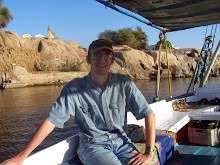
Wednesday, July 14, 2004

Flight Delays

For what it's worth, I'll testify to the truth of this. After landing at JFK Monday night, I had an hour wait before we could reclaim our luggage, then Tuesday morning I had to wait an hour and five minutes for a JFK-LaGuardia shuttle, the flight to O'Hare spent an hour on the runway, and the flight to Madison was delayed an hour and seven minutes, boarded later than that, and then spent an hour or so on the runway, as well.

Saudis, al-Qaeda, and Iraq

Ma'ariv reports on some intelligence suggesting that certain factions of the Saudi royal family are supporting al-Qaeda due to their belief that in coming years jihadist elements are likely to be the major players in post-Saddam Iraq. An important point about the Saudis is that they scheme against each other all the time, and it is very likely some princes sincerely try to fight terrorists while others want to cut a deal with them. This is one reason why I don't object to President Bush's relations with Crown Prince Abdullah, who seems very much in the reformist camp, and is perhaps banking on strong relations with the U.S. to consolidate his power after the death of the ailing King Fahd. However, if true, this story represents one more reason to oppose President Bush's Iraq policies, which are clearly making us appear weak to some in positions of power.

Uzbek Aid Suspended

Critics of the Bush administration frequently cite Uzbekistan as an example of how the U.S. is not truly following a policy of unwavering support for democracy. Thus, it seems fair to note that the State Department has decided to suspend some aid to that country in response to its poor human rights record. Cynics, however, might note that the aid suspended is for economic development and non-weapons-related military spending, so it doesn't sound like it will have any lasting impact - just soldiers waiting a little longer for their pay or something.

Ceuta Border

I was intrigued by Stephen Lazer's post on Spain's wall between its Ceuta enclave and Morocco simply because I just walked across that border Saturday morning, and found it easier than crossing between the United States and Canada. I was planning to write a post about how Spain apparently doesn't believe in border security! Basically what happened was on the Moroccan side they took my passport behind a little divide, presumably to check my visa in their system or something, then sent me on my way. Lugging my two suitcases and backpack I was waved through the actual border and the Spanish side without any questions, forms or inspections of any kind. It was a little weird.

Now it was hot, I had a lot of luggage, no idea where I was staying, and no money for a taxi, so my observational skills may not have been at my best, but no one seemed to be having any difficulty whatsoever. But still, this is not really a secure border. Half an hour away is Tetouan, in the heart of Morocco's drug-producing country, and there's nothing to really stop someone from wandering across the border bearing tons of hashish or other illegal substances. I suppose people from some countries might have to get a visa first, or they wouldn't bother sneaking across, but still once you're there, you're there.

This suggests something interesting about the immigration policy in the area: It is based primarily on keeping out people rather than things. Furthermore, the treatment of people is different based on where they are from. Because I am an American, I could get away with bringing anything into Europe I wanted - at the Gibraltar/Spain border, the British guy had all the presence of a random cop walking a dull beat. If I am a Moroccan, things are probably more difficult, but even then once I have permission, I can do whatever I want. Whether this is really the best way to run the system is probably open to debate. As it is, I would not be surprised to find that Ceuta is awash in illegal smuggling activity but that Spain is functionally indifferent while they try to figure out how to keep out economic migrants.

Musings and Imaginings

Ladies and gentlemen, from the world of English graduate school, we bring to you the new blog of Kristin Smith, Musings and Imaginings!

Tuesday, July 13, 2004

Published

While I was in Morocco, I appeared in print for the first time as an academic historian in The Greenwood Encyclopedia of Daily Life. It feels really weird to read an article and then see my name at the bottom of it.

Return

Well, I'm back in Madison, after a trip home in which both my domestic flights were delayed at least an hour. I'm still adjusting, though - I left Fez on July 3 and began travelling around on my own. At this point I've slept in nine different places in the past eleven nights. So for the moment this just feels like the latest place.

Anyway, expect two more Morocco-related write-ups, as well as a resumption of my usual news-related posting habits.