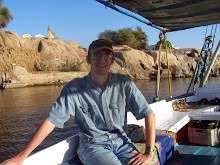
Monday, October 11, 2004

Deadlines

Forty-seven minutes before the deadline, one of my references has still not submitted their form for the Fulbright-Hays grant. Professors are like that. However, doing some random homework assignment shortly before class rather than at home can still get you a stern lecture.

UPDATE: All forms have been submitted. My advisor thinks I absolutely nailed the proposal essay. Let's hope he's right!

Iraq Troop Levels

One of President Bush's bigger disagreements with reality in this campaign has been the line that the generals in Iraq have all the troops they need, and if they ask for more they can have them. Realistically, of course, such troops don't exist. Now Spencer Ackerman has the goods on someone whose request for more troops got denied.

Afghanistan's Elections

Afghanistan's Presidential elections went off much as expected. There have been some allegations of fraud. At the same time, turn-out was extremely high. I also maintain that advance intimidation was a factor underming these elections, as even with the secret ballot, those in authority will be willing to punish concentrations of those who vote the wrong way.

The bottom line for Afghanistan, however, is that Hamid Karzai will have a renewed mandate recognized in that country, if not in every corner of the globe. He seems clearly to have been the people's choice, one reason why fraud and intimidation were not even more widespread than they already were. I'm not willing to sign off on the idea that Afghanistan is a democracy, but there were no serious disruptions of its path toward greater stability and responsive government. That was really all we could hope for.

Election Wisdom

"For now we see but through a glass darkly." - Paul of Tarsus (Corinthians I)

Sunday, October 10, 2004

Iran Blockade

My friend and neighbor Dave Milovich wants more specifics about what it means to get tough on Iran. He suggests a naval blockade as something between sanctions and military force. However, such a move could only come with the cooperation of the international community, as blockades deny not only the blockaded country's right to trade, but the rights of the rest of the world to trade with them. What does the U.S. do when other world powers decide to ignore us? And, of course, once you have enough of an international coalition, you might as well just use sanctions and save your ships.

Saturday, October 09, 2004

Tetouan

The Rif Mountains form the backdrop to Tetouan:

Library Records

When Senator Russ Feingold voted against the Patriot Act, one of his concerns was the privacy of library records. Following a chain of links from here, I found this and this about how the FBI is demanding library records to see who scrawled a bit of potentially pro-al-Qaeda graffiti in a rural Washington library book. Americans willingly accept contraints of the "bomb-in-an-airport" variety, but do we really want to become a police state where under no circumstances can we relax and do whatever this graffiti scrawler was trying to do (even if in potentially bad taste)?

Friday, October 08, 2004

Tonight's Debate

I don't agree with the line coming from CNN and MSNBC that the debate was a draw. That has to be the effect of Bush exceeding his last performance. The President had his moments, but there were so many times when Kerry would reply effectively to a Bush attack and the President would be completely unconvincing in sticking to it. Regardless of my own stands, I see the partial birth abortion ban and drug importation from Canada as two examples of this. Bush also looked desperate at times, ranting about health care rationing and caught way off balance by his timber income. Kerry was effective, and I could easily picture him leading the country. While I have always been voting for him, I have not generally been enthusiastic.

Incidentally, I was invited to three debate watching parties tonight. I don't remember any in 2000.

Site Feed

I now have a site feed. Look at the sidebar between the links and featured books.

Iraqi Casualties

The tone of this bothers me. Iraqis are human beings just as much as the British are, and clearly those on our side should be counted as allies, even if not technically part of "the coalition," however that informal body is defined. I find the fact Democrats are only counting them as part of some political gamesmanship deeply offensive.

Women in Tajik Mosques

In a curious twist, Tajikistan is attempting to fight militant Islam by forbidding women from attending mosques, a stance associated with conservatism in Islam. However, many women are fighting police to get in anyway.

Lebanese al-Qaeda

RFE-RL has a good round-up of the debate over al-Qaeda in Lebanon. It would not surprise me if there were al-Qaeda operating in Lebanon, and I don't think Sunni/Shi'ite differences are enough to prevent them from cooperating with Hizbullah, though Hizbullah's focus on comprehensively promoting the interests of Lebanese Shi'ites means they really don't have that much in common in the world of radical Islamic militants. However, because global terrorist organizations tend not to be tightly defined containers, I think it likely people who were affiliated with al-Qaeda in Afghanistan might be willing to go somewhere else and hook up with a new organization that shared whatever traits led them to join al-Qaeda originally.

Thursday, October 07, 2004

A Success

Last year I didn't get a Fulbright at least partly because the professor who wrote my language reference didn't think I was qualified to do the research. This afternoon he evaluated me again, and after examining me on an account of Ahmad b. Hanbal debating the nature of the Qur'an with his opponents, pronounced me fit for service. This is a load off my shoulders, and I'm still decompressing four hours later.

My career can now continue.

Wednesday, October 06, 2004

Thus Spake Weisglass

Jonathan Edelstein isn't happy with Sharon advisor Dov Weisglass's comments that the Gaza withdrawal was meant to freeze the peace process. I'm slightly more relaxed. At the moment, Sharon's Gaza plan is the only proposal to change the status quo for the better. If this helps it, so much the better. I don't think Sharon believes any serious negotiations are possible while Arafat remains in power. At the same time, this makes it more difficult for Palestinian militants to claim credit for driving the Israelis out. The major sacrifice is in the court of public opinion, especially in Europe, and I think it's probably worth it if the benefits are realized. Sometimes you have to burn your closer to nail down game seven before you worry about the next round.

EU Ironies

Opposition to Turkish entry into the European Union comes from its religious discrimination and the fact its people are Muslim.

Tuesday, October 05, 2004

Thanks, Reagan!

President Reagan's Star Wars program is proving useful to Sudanese refugees.

OSCE in Afghanistan

The OSCE has announced they will not issue a statement about the fairness of Afghanistan's elections because they are so unlikely to meet international standards. However, they're still going to be constructive, preparing a list of suggestions after the polls. This is to avoid embarrassing the European Union, which is one of the main organizers of the elections. Meanwhile, this article gives a good picture of the hopes and difficulties surrounding the event.

Monday, October 04, 2004

Weird

Pat Robertson is really weird.

Smoke Detectors

A new report says that the purported plutonium-239 seized in Kyrgyzstan is merely a collection of old smoke detectors.

Area Studies and Government

Matthew Yglesias has some issues with Lee Smith's Title VI column. As regular readers might suspect, I do, too. As I commented in Yglesias's thread:

"There are many things I wonder about looking at these stats. One is the degree to which they include with funding FLAS money, which at UW accounts for about half of all "Title VI" funding but which by law can go only to grad students. (At least some Democrats tried to change this last year.) More important, I wonder if they count Title VI-A in with Title VI. Title VI-A is just for languages and undergraduate development - in theory, the "experts" produced by Title VI programs go out into the world and build programs under Title VI-A. So if you look strictly at Title VI, you're missing a huge part of the story.

"Finally, I wonder about this degree-granting business. By that, I assume they mean area studies majors. But there are very few of those in proportion to people who take and benefit from the classes. You can be an International Relations major and use Arabic as your language, for example. I've had students in Islamic history who weren't concentrating in Middle East Studies but were reserves or ROTC and just wanted background in the region. I doubt this shows up in their stats."

Sunday, October 03, 2004

Kyrgyz Plutonium

Kyrgyzstan's National Security Service is investigating the plutonium-239 seizure, and says that it was not of Kazakh origin. Wherever its from, this whole affair just shows how porous Central Asia is to loose nuclear material. The need to manage this problem is the reason I don't speak out strongly against our connections to Central Asian dictators, though I do object when we pretend democracy promotion is the key element to our foreign policy.

Friedman Returns

Liberal hawk columnist Tom Friedman has returned, with a column demolishing the Bush administration's handling of Iraq:

"Being away has not changed my belief one iota in the importance of producing a decent outcome in Iraq, to help move the Arab-Muslim world off its steady slide toward increased authoritarianism, unemployment, overpopulation, suicidal terrorism and religious obscurantism. But my time off has clarified for me, even more, that this Bush team can't get us there, and may have so messed things up that no one can. Why? Because each time the Bush team had to choose between doing the right thing in the war on terrorism or siding with its political base and ideology, it chose its base and ideology. More troops or radically lower taxes? Lower taxes. Fire an evangelical Christian U.S. general who smears Islam in a speech while wearing the uniform of the U.S. Army or not fire him so as not to anger the Christian right? Don't fire him. Apologize to the U.N. for not finding the W.M.D., and then make the case for why our allies should still join us in Iraq to establish a decent government there? Don't apologize - for anything - because Karl Rove says the "base" won't like it."

I was not a Bush-hater in March 2003. President Bush lost me with stuff like this.

Saturday, October 02, 2004

Disaster Avoided

Juan Cole points out just how disastrous President Bush's Iraq policy could have been had he followed his original plan. It's occurred to me that one reason Bush continues to enjoy such high levels of support is that his incompetence is almost beyond belief. Therefore, they assume his critics are just radicals.

Fez al-Bali

Of my Morocco posts, none seemed to have more of an impact on people that my comments about Fez's old city. In fact, one woman came up and hugged me randomly, citing that post as her reason. Here's a panoramic view of Fez al-Bali at dusk taken from the Merenid tombs. The two tallest minarets belong to the Qarawiyin Mosque and tomb of Moulay Idris II.

Friday, October 01, 2004

Excitement

I-chi-ro! I-chi-ro!

Syrians for Bush

Reghida Dergham writes in Dar al-Hayat sees Syria's border moves as a sign the Damascus regime both hopes for and expects a Bush victory in November:

"Damascus decided that it would be best for it to comply with Washington's demands, the latter being more important to it than Paris. Damascus understood the demands as relating first and foremost to Iraq, then to Palestine vis-à-vis Palestinian organizations in Syria, and least importantly to Lebanon.

"That is why Syria was quick to fulfill its obligations regarding border cooperation and coordinating intelligence efforts within the trilateral American-Iraqi-Syrian mechanism. Syria was quick to cooperate on a very important demand having to do with the discovery of funds in Syria belonging to individuals or organizations with links to activities in Iraq, regardless of whether those activities are termed terrorism or resistance. The American Secretary of State Colin Powell revealed that his meeting with the Syrian foreign minister Farouk Sharaa touched on specific names and funds which Damascus promised to investigate with complete transparency.

"Syrian diplomatic assessments are that a 'qualitative shift' in relations with the American administration opens the door to a new approach to negotiations with Israel in addition to closing the door on the campaign against it and on calls for regime change in Syria."

Syrian Border

The Lebanon Daily Star has an article about escalating tension between Jordan and Syria over both land Jordan says is occupied by Syria and infiltration of militants and weapons into Jordan either unimpeded or actively aided by the Damascus government. This comes as the United States claims to win Syrian cooperation in stopping militant infiltration into Iraq and pressure mounts on Syria to withdraw from Lebanon. Syria has the reputation of an ally in the fight against al-Qaeda, yet this article suggests the two are working together in some manner. It may be that if al-Qaeda has formed connections to Hizbullah that Syria's stance has also shifted. However, this is all very murky, and a lot more evidence will have to come to light before we can get the straight of it.

Incidentally, I have been an accessory to smuggling between Syria and Jordan. Produce prices are higher in Jordan than Syria, so people providing transportation across the border will stock up in Syria, claim it all belongs to the foreigners, and then sell at a higher price in Jordan. Because Syria doesn't seem to have an enforced taxi license system, this is a gig anyone can get in on, and on one of my trips my friends and I were apparently used in a watermelon smuggling scheme. It was funny when the border guards inspected the vehicle and unloaded all the watermelons looking for something being smuggled. It was even funnier when I looked around and saw that over 80% of the cars being inspected had watermelons in the trunk.

UPDATE: See the comments for some security implications for watermelon smuggling we didn't consider, as confirmed here.

Thursday, September 30, 2004

Avoidance Practice

I missed much of the debate while I was out campaigning for Russ Feingold near campus. It was interesting to watch how people responded differently to my attempts to engage them. Women are definitely more practiced at avoiding unwanted attention than guys are.

Dr. Ahura

Pejman Yousefzadeh posts an article explaining how a Zoroastrian mystic who appeared on a Los Angeles-based TV show is the latest hope for the reform movement. The mystic's triumphant return to Iran will supposedly take place on October 1. Feel free to joke in the comments about how this is the much-discussed "October Surprise."

Baseball in Washington

Hughes for America is looking for ideas for a nickname for Washington's new baseball team. Personally, I like the "Washington Grays" idea, but there are a lot of others floating around, both funny and serious.

UPDATE: On this thread I just learned that the District of Columbia's official bird is the swamp robin. That would rock.

Wednesday, September 29, 2004

When Not a Grad Student, I'm a...

Reasons

This year I am voting against people who support this and this.

UPDATE: Red State's Sebastian Holsclaw has more on the torture issue.

Terrorism and Gangs

Via Oxblog, I see a Washington Times article on al-Qaeda's attempts to build ties with organized crime. By coincidence, this same issue arose in William Olson lecture here at UW Monday, so I'm inclined to take it seriously. One issue I haven't heard discussed, however, is how this will affect the application of police powers designed for use in terror-related cases. If a kid buys marijuana from a gang engaged in trafficking terrorists, could he be viewed as someone linked to a terror-related group? These issues are far off my expertise, but I'd like to know more.

Freedom in Bahrain

Bahrain may have elections, but the whole freedom thing is taking a while. A human rights activist named Abd al-Hadi al-Khawaja called for the Prime Minister's resignation, so the government has closed the Bahrain Center for Human Rights. The center has apparently closed their FAX line so as to avoid receiving the official letter on the matter, but it's only a matter of time before things are official. This shows how Gulf governments continue to see rights as something given by the ruler to the people. Parliaments are called by the ruler's good graces as an official forum for people to express themselves. Criticizing the government too strongly or holding it responsible for problems in the country, however, remain off the table. These countries embody the term "paternalism," as what passes for free expression is like the father consulting his kids on what they want to do on a weekend or letting them decide how to arrange their rooms.

Mahmood of Mahmood's Den has more on this, focusing on the idea that the Prime Minister is not actually responsible for poverty in Bahrain and the center's political tactics are off.

HRW: Elections Hijacked

RFE-RL has the scoop:

"The report says that regional armed militias across the country have held onto political power and are using force, threats, and corruption to dominate the election process.

"Worse, says the report, a number of the warlords commanding these militias are allied with the U.S. forces. Sifton said that because of the under-manning of international forces by both the United States and its NATO allies, the people guarding polling sites often will be the local militias ordinary Afghans fear most."

Tuesday, September 28, 2004

Nuclear Proliferation

Two men trying to sell plutonium have been arrested in Kyrgyzstan. Let's get a bit more passionate about Nunn-Lugar, shall we?

Protestors

Yesterday the Middle East Studies Program lecture series drew its first protestors. It was rather fun when we got to the question-and-answer period and the speaker drowned confrontational questions in knowledge of the situation. At the end, the chair was calling the event to and end, but Dr. Olson asked to take a question from a protestor in the back who'd had his hand up for awhile. The guy asked about the real reasons we went into Iraq, and as Olson went into his answer, the questioner interrupted and demanded he give a clear answer within the next seven words. Dr. Olson indicated that he didn't have to answer according to any particular rules and stopped. That was probably what the quote about "his refusal to answer questions" referred to.

Monday, September 27, 2004

Afghanistan: The Positive View

Oxblog's David Asednik has some positive views of the situation in Afghanistan. I should state that my focus on election difficulties is mostly a reaction against Republican rhetoric suggesting that the country is now a stable democracy. When I step back and look at the overall situation, I find the situation is a lot better than it was five or ten years ago, and am starting to think that a stable and responsive government could emerge within ten years. One indicator of how the situation has improved is the refugee flow, which has been one of people returning to the country for some time now, even if their quality of life still sucks.

Florida Voting

Jimmy Carter, known throughout the world for his interest in fair elections, is warning of possible irregularities in Florida. Many of those who regard this as a bizarre conspiracy theory are Republicans who strongly believe Kennedy won the 1960 election due to corruption in Chicago. I suspect that in 2000 and 2004, Florida has become the latest Chicago.

Saturday, September 25, 2004

Allawi in America

Iraqi Prime Minister Iyad Allawi's visit to Washington induced in me a sort of incoherent strangled sputtering. Fortunately, others were more articulate. This blog post gives part of the reasons why this was not a great moment in Iraqi history:

"Allawi was brought here – forty days from the election – as part of the Bush re-election strategy, and everyone knows it. This was supposed to be a victory lap, further solidifying the themes presented at the Republican Convention – until Kerry and reality intruded. Indeed, Allawi even adopted Bush talking points about how much progress Iraq was making, and that the terrorists were 'getting more desperate.' So, let’s dispense with the little charade about how this trip was beyond politics. It was entirely about politics.

"Second, given that Bush is so radioactive in Iraq right now, I think that trotting out Allawi in the Rose Garden does little to help his legitimacy in the eyes of American-hating Iraqis. On this point, Lockhart is right on. The more Allawi is seen as a puppet of Bush (which was pretty much confirmed this week), the less chance of success he – and thus we – have. If I'm right, then Bush is sacrificing Allawi's legitimacy for the sake of his re-election."

There's more at the link.

Jewish Cemetery

In honor of Yom Kippur, here's part of the Jewish cemetery in Fez. The tomb with green trim is that of Solica, who refused to convert to Islam and marry the governor of Tangier. She was thereafter revered by both Jews and Muslims.

Friday, September 24, 2004

Intimidation in Afghanistan

From RFE-RL:

"A broadcast by a tribe in eastern Khost Province has warned its members to cast their vote for Afghan Transitional Administration Chairman Hamid Karzai or face retribution, AFP reported on 24 September. 'Vote for President Hamid Karzai [in the 9 October election], or we will burn your houses down,' was the message broadcast by the Terezay tribe, a small Pashtun tribe numbering between 120,000 to 150,000...A Terezay tribal elder, Wakil Sayyed Anwar, told AFP that 300 tribal chiefs jointly drafted the threatening statement."

There will be security forces monitoring the election, but will they be there six months later to protect villages which had a high percentage of people who voted in a way other than they were instructed to?

Thursday, September 23, 2004

Shawn Green and Yom Kippur

Jack McDowell is upset that Shawn Green won't play on Yom Kippur, saying he would play on Christmas despite being a Christian. This comparison breaks down on several levels. First, most denominations consider Easter holier than Christmas. That aside, Christmas is a day of celebration with few if any practices set by doctrine. Yom Kippur is a Day of Atonement which according to the wikipedia entry involves this:

"On the Day of Atonement the pious Jew becomes forgetful of the flesh and its wants and, banishing hatred, ill-feeling, and all ignoble thoughts, seeks to be occupied exclusively with things spiritual. Jewish prayerbooks note that while public acts of contrition are mandated, the most effective corrective is that stated by the Biblical propehts, who teach that the true fast-day in which God delights is a spirit of devotion, kindliness, and penitence.

"The serious character impressed upon the day from the time of its institution has been preserved to the present day. No matter how much else has fallen into desuetude, so strong is its hold upon the Jewish conscience that few Jews, unless they have cut themselves entirely off from the synagogue, will fail to observe the Day of Atonement by resting from their daily pursuits and attending service in the synagogue. With a few exceptions, the service even of the Reform Jewish synagogues is continuous through the day."

In other words, Green's decision is closer to a Catholic fasting on Good Friday than deciding Christmas ham is more important than work.

Yet Another Post on Afghanistan's Elections

I just returned from a Center for South Asian Studies lecture by Michael Carnahan, Senior Advisor to Afghanistan's Finance Minister. During this, I had the opportunity to ask about whether Afghanistan's forthcoming elections would really be in any way democratic give stuff like this and this. His response was not terribly reassuring. After a bit of "umm"-ing, he talked about how unpopular the warlords were, and suggested that no matter what they did Karzai would still win and he was the most popular candidate. This led to a suggestion that savvy warlords might figure out who the people wanted to vote for and try to puch that agenda to make themselves look influential, and that really who's to say someone voted for a certain candidate out of conscience or intimidation? He also added something about the importance of securing all the polling places so warlords couldn't intimidate people.

Only the last point really addresses my concerns, and he admitted he thought they should have fewer polling places to make that job easier. The issue of voter registration was not addressed. He did, however, make a solid case that Afghanistan has the potential for long-term stability on the current trajectory, and powerful people were embracing the process (such as it is) and willing to compromise.

Allawi's Outreach

Matthew Yglesias's remark that Iyad Allawi isn't really trying to weaken the insurgency by bringing in new elements isn't entirely correct. In both Falluja and Najaf, Allawi has used development aid as a lure to local notables who currently oppose him, which I have interpreted as essentially a bribe to make them the chief dispensers of patronage in their area, but dependent on his government for that source of influence. Earlier this week, I talked to someone who knows much more about these things than I do, and he felt my interpretation was spot on. However, he wasn't optimistic it would work as well as it has in Afghanistan because he said Iraq and Afghanistan don't have the same sort of political culture. I'm guessing the differences stem largely from the fact that Iraq has a highly educated urban class of professionals for whom issues like policy and ideology matter a great deal, whereas in Afghanistan you see more emphasis on decentralized personal ties regardless of ideology. In any case, it seems clear that Falluja is still far from under Allawi's control.

Fulbright Application Process

I am currently applying for a Fulbright-Hays Doctoral Dissertation Research Abroad grant. Letters of reference can only be submitted electronically. The deadline is October 5. And today the person who adminsters that program at UW tells me there is a planned system outage from October 1 - October 3.

Amazing.

Terror Watch List Changes

I must say that when I saw this article's headline, I was hoping for something a little different.

Wednesday, September 22, 2004

Title VI

One common criticism of the Title VI program is that the money goes mainly to produce other academics. I've always said that wasn't a problem, as you need those experts to fan out into the world and teach undergraduates. Most academic jobs are at teaching-oriented universities, and students there have international education options often because of the Title VI centers which train these academics. However, while working today's visit of the Senior Program Officer who oversees the Title VI-A program which is our current funding source, it became apparent from conversations that the system is actually intended to work that way. Title VI-A - focused on undergraduate curriculum development and language training - is an integral part of the Title VI apparatus.

An additional point: Here is a rundown of the Title VI NRC funding for the University of Wisconsin. of the $3.9 million, $1.9 million is in FLAS fellowships for those who require language training as part of their training. The regulations governing FLAS fellowships specify that they are only for graduate students. As long-time readers will remember, last year Democrats in the House of Representatives tried to make undergraduates eligible, but the Republicans stood in the way. It seems something of a consensus that the percentage of general undergrauates who will enter government service is higher than that in the graduate student population, so Republicans were standing in the way of a program change that would have helped cure the shortage of expertise in Arabic and Persian afflicting the federal government.

Are you worried about directing government funding in a way that will provide direct short-term benefits to the federal government? If so, help the Democrats take back Congress in 2004.

Tuesday, September 21, 2004

Kerry's Iraq Speech

Last year, I got a lot of links from conservative blogs. Over the past year, these have largely dried up. If I have any remaining Republican readers, however, could they please explain how this speech constitutes "retreat and surrender" in Iraq?

In addition, I'm seeing Kerry's statements about bringing troops home in six months taken out of context, both in TV news clips and Republican comments on the subject. Can I please have a clear explanation of what is wrong with them in context? That context, as I see it, is this:

"If the President would move in this direction … if he would bring in more help from other countries to provide resources and forces … train the Iraqis to provide their own security …develop a reconstruction plan that brings real benefits to the Iraqi people … and take the steps necessary to hold credible elections next year … we could begin to withdraw U.S. forces starting next summer and realistically aim to bring all our troops home within the next four years."

Troops for Afghanistan

The Bush administration is sending an additional 1000 troops to Afghanistan in order to maintain order in the south during the election. This is good, and I would like to see more support for our Afghan reconstruction efforts, as they are in a region where the people who attacked us on September 11 are known to operate. Sadly, two more American troops were killed Monday in Paktika province.

Wolf in the Fold

Throughout the centuries, a fascinated abhorrence with serial killers has led to their becoming famous. The following report is nestled among those of civil war and intrigue in Tabari's History under 257 A.H. (870-871 C.E.), and was transated by David Waines for the SUNY edition:

"In the same year, at a place called Birkat Zalzal, a strangler from Baghdad was apprehended. He had murdered a number of women and buried them in the house where he was living. He was brought to al-Mu'tamid, and I learned that he had ordered the prisoner whipped. He was given two thousand lashes and four hundred strokes with a bastinado, yet he continued to live. Only when the executioners beat his testicles with two wooden flogging posts did he finally expire. His body was then returned to Baghdad, where it was strung up in public view; the corpse was later burned."

Saturday, September 18, 2004

Gibraltar

This is a view of Gibraltar as you walk from the airport/Spanish border into the city. In the background on the south end of the Rock is the "Moorish Castle," now a prison.

More Herat

IWPR has a good overview of recent events in Herat. That and this BBC story leave the impression of a successful change in governors, but an unstable city. One issue in the background here is the fact Afghanistan has never had a strong central government for any length of time, and people in the provinces value their independence. Furthermore, Ismail Khan retains influence - he is remaining in the city, and was responsible for the order being restored. Without the governorship, however, his influence will start to wane.

Thursday, September 16, 2004

William Olson in Madison

The text of an e-mail I just sent that might be of interest to area readers:

Dr. William Olson, formerly Chief of the Information Management Unit for the CPA in Baghdad, Iraq and now with National Defense University, will give a talk entitled "Transnational Threats to the U.S. National Interest" at 4 p.m. on September 27 as part of the Middle East Studies Program's Fall Lecture Series "Change in the Middle East." The event, which is free and open to the public, will take place in the Pyle Center Auditorium.

The Middle East Studies Program is fortunate to have as its guest Dr. Olson, who in Iraq was responsible for the collection, analysis, and publication of CPA-related information on Iraq reconstruction. Before this, he served in several different capacities with both the Department of Defense and the Department of State, and has done work related to international peacekeeping, counter-narcotics operations, and counter-insurgency operations through the world. In addition he has been a Senior Fellow at the National Strategy Information Center, a Washington think tank. While at the Center, Dr. Olson worked on projects on global ungovernability, on international organized crime, and on bank security issues. He has also served as a participant in and contributor to working groups at CSIS and the Heritage Foundation on homeland security, as well as the Consortium on Intelligence's Working Group on Intelligence Reform.

Dr. Olson's published works include over 50 articles and books on light forces, US strategic interests in the Persian Gulf, the Iran-Iraq war, the Soviet invasion of Afghanistan, guerrilla warfare, terrorism, the war on drugs, conflict management, and most recently on studies on international organized crime and homeland security. He is the editor of a book series on regional conflict through Harper-Collins, founded the Journal of Small Wars and Insurgencies, edited a special volume for the Annals of Political Science on small wars, served on the editorial board of Parameters, and is co-author and co-editor of Trends in Organized Crime.

Signs of the Day

While on the bus into campus this morning, I realized that in my tired rush to leave, I had put my shirt on inside out. That was pretty impressive.

As you might have guessed, I've been a tad busy lately.

Tuesday, September 14, 2004

Russian Star Wars

I've been looking for something clever to say about the latest "anti-terrorism" moves by the man President Bush considers a good friend, but don't think I can top Kevin Drum on this one.

Monday, September 13, 2004

Iranian Baha'is

I knew that Baha'is faced persecution in Iran, but hadn't realized quite how severe things had become:

"The advertisement cites the destruction in June of the historic Tehran home of Mirza Abbas Nuri, father of the founder of the Baha'i faith, Mirza Hussein Ali Nuri or Bahaullah, as the Iranian government's most recent action against the minority. A 13 September press release from the Baha'i community notes that earlier this year the Iranian authorities destroyed the gravesite in Babol of Mullah Mohammad-Ali Barfurushi, a prominent Baha'i known as Quddus. Bani Dugal, a Bahai representative, described these developments as 'part of a concerted plan on the part of the Iranian government to gradually extinguish the Baha'i faith as a cultural force and cohesive entity.'"

Muslim fundamentalists classify the Baha'is as Muslim heretics rather than People of the Book, so they have none of the protections of the latter.

September 11 Blogging

Imshin takes American bloggers to task for not doing more on September 11. As someone who did exactly nothing, my reason is that thanks to the Presidential election, I've been thinking about terrorism and related issues rather steadily for months. In fact, in this context, the event seems more like a campaign issue, and even more than last year it seems like anything non-standard I had to say would have been seen as divisive rather than commemorative. In emotional terms, I haven't had any new revelations or feelings related to the attacks during the past year, anyway. For me, it's become part of the general problem of global terrorism, and as regular readers know, I talk about that all the time. Maybe Imshin's right and I should have put up some simple memorial post or something, but there you have it.

UPDATE: This is an example of what I mean. I agree with it, but is this really what people have in mind when they say commemorate September 11?

Sunday, September 12, 2004

Body Image

One complaint I hear from people that I can never fully relate to is dissatisfaction with one's body image. The most common form of this I run into is women who are obsessed with the idea that they're fat. I occasionally have to stop myself from laughing when certain people say this. But this is really something I see across a broad spectrum of society, and seems to affect people's overall opinion of themselves in extraordinary ways.

While aware I could probably be more physically attractive than I am, how I appear is just part of me, and I can't imagine looking any other way. By the same token, I've noticed that while looks factors into my attraction for members of the opposite gender, it's a highly malleable trait. There are lots of people whom I found attractive only after I got to know them and started liking them despite there being no discernable change in appearance.

This may suggest that looks are like clothing - how you wear them matters far more than anything else. I think, too, with me there is another issue, one from the same vein as the post immediately below this one. On a very deep level I cannot explain, I perceive each person as a unique and special part of Creation, and quite easily get frustrated when they don't see themselves the same way. This isn't just a "God made you that way, are you questioning his judgement?" sort of thing. Looks seem so superfluous, yet for so many people they are a burden which drains the spirit and therefore hurts the quality of their lives. And because the major reason for this is the way body image is played up by the media, if I ever meet the person responsible for that, I'm going to give them a very serious piece of my mind. I grew up Baptist, so there's a fair amount of Zell Miller-ish fire and brimstone lurking in me =)

History and My Religious Choices

For years I've been most attracted to Christian denominations which have about them an aura of tradition and history. This I attributed to the fact that I'm a historian, and assumed it was nothing more than aesthetic preference. Recently, however, I've realized there's more to it than that. It sounds like a cliche, but who you've been really is part of who you are. What's more, how we understand our own past says something about us. Given the diversity in the Christian tradition to which I belong, it's not enough to just say you're going to follow the Bible and not worry about anything else. I grew up Baptist, the sola Scriptura denomination par excellence, and almost all the key tenets are based off highly contestable interpretations of scripture. Admitting that tradition counts for something feels to me more honesty than heresy.

If I'm going to join your faith, what I want is to know what you make of the past 2000 years of Christian history, generally involving people with beliefs as pure as your own and whose experiences represent a valuable spiritual resource. I also want to know what's important to you, as seen in what you've fought for over the years and what you're likely to hold dear when the tide of history alters everything else. I don't care so much about the details of your worship service, though for purely aesthetic reasons I avoid those with modern music and such, but I do want to know why you do the things you do, and what is commemorated in all the small rituals and services scattered throughout the year. Issues like these play a large role in where we situate ourselves in Creation, and ideally in a universe of religious experience that includes billions who are not Christian at all.

For reasons I won't go into here, this year I've resolved to finally select a denomination. In a few short months, I hope to have formally hooked up with either this outfit or this one, two churches very different from each other and yet each attractive to me in its own way. I honestly have no idea which way this will break, and of course given the fact that I spent most of 2003 explaining why I wasn't a Deaniac but then wrote this, it's entirely possible that I could wind up a convinced Catholic or something. To be continued...

Crisis in Herat

In a moment of truth which will go a long way toward determining Afghanistan's future, Hamid Karzai has fired Herat governor Ismail Khan and appointed in his place one Muhammad Khair Khuwa. Many Heratis are opposed to this, however, which is now causing rioting in the streets. With American military backing, Karzai is seizing a moment of weakness for Khan, who just went through a major battle with another warlord. Getting control of the relatively prosperous Herat region would be a major victory for the central government, but many Heratis are undoubtedly unwilling to give in to a central government of any kind. Another factor in the background of this is that Ismail Khan was Iran's major ally among the Afghan warlords. They gave him arms, money, and provided development aid to his territory. Whether they will do anything to openly help in now is doubtful, but clandestine support is likely.

Boom

This is enough to make me a regular churchgoer.

UPDATE: Never mind. The North Koreans were just getting rid of an inconvenient mountain.